The syringe filter you use in HPLC sample preparation directly determines your column lifespan, your baseline noise, and your analyte recovery. Choose the wrong membrane, and you introduce ghost peaks, lose expensive analytes to adsorption, or dissolve filter material into your sample — outcomes that cost far more than the filter itself.
This guide breaks down the four membrane materials available in India — Nylon, PVDF, PES, and PTFE — by chemical compatibility, application fit, and real-world performance across pharma QC, biotech, environmental, and food testing laboratories. Every recommendation is grounded in application data, not marketing copy.
Scientific Edge is a Delhi NCR-based laboratory supply and procurement partner serving pharmaceutical, diagnostic, environmental, and food-testing labs PAN India, as an authorized channel partner for Whatman, Cytiva, Borosil, SRL, and Loba Chemie.
Why Does Your Choice of Syringe Filter Membrane Actually Matter?
The filter isn't a passive barrier. It's a chemically active interface between your sample and your column. A pharma QC lab running dissolution testing on 60 batches per week needs a different filter strategy than a biotech lab preparing protein samples for LC-MS, even if both use 0.45 µm pore sizes.
Here's the breakdown — membrane by membrane, application by application.
Which Membrane Material Should You Choose? (The Compatibility Matrix)
| Membrane | Chemical Nature | Best Applications | Avoid | Protein Binding | Brands in India |
|---|---|---|---|---|---|
| Nylon | Hydrophilic | General HPLC (aqueous + mild organic), dissolution testing, content uniformity | Strong acids (pH < 3), strong bases | Moderate — binds proteins | Whatman, Axiva, Millipore |
| PVDF | Hydrophilic | Protein samples, biological fluids, HPLC assays, LC-MS prep | Strong bases, DMSO (extended) | Very low | Whatman, Millipore, Pall |
| PES (Supor®) | Hydrophilic | Sterile filtration, tissue culture media, high-throughput aqueous filtration, pharma QC | Aggressive organic solvents (acetone, THF) | Lowest of all four | Pall (Acrodisc), Millipore |
| PTFE | Hydrophobic | Aggressive organics (hexane, DCM, chloroform, toluene), strong acids/bases, GC sample prep | Aqueous samples (requires pre-wetting) | Very low | Whatman, Pall, Axiva |
In our dispatch records across the last 12 months, PES membrane syringe filters have outsold nylon 3:1 among pharma QC labs in the Baddi–Nalagarh corridor — driven almost entirely by protein-binding concerns in dissolution and assay sample preparation. Biotech labs in Hyderabad's Genome Valley show an even stronger skew toward PES and PVDF. Meanwhile, PTFE dominates orders from petrochemical QC labs in Panipat and Haldia, where chlorinated and aromatic solvents are the standard matrix.
How Do You Choose Between 0.22 µm and 0.45 µm Pore Size?
0.45 µm — the HPLC standard
- Removes particulates that damage columns and block injector frits
- Sufficient for USP dissolution testing, content uniformity, and routine assay methods
- Lower backpressure = faster sample throughput
- Your default unless the SOP specifically mandates 0.22 µm
0.22 µm (0.2 µm) — when you need more
- Required for sterile filtration of parenteral drug formulations, tissue culture media, and biological buffers
- Necessary when UHPLC column packing is ≤ 2 µm (finer particles clog from 0.45 µm filtrate contaminants)
- LC-MS with electrospray ionization benefits from finer filtration — less signal suppression
- Higher backpressure — use a 25 mm diameter filter for volumes > 5 mL to compensate
The expensive mistake: Using 0.22 µm when 0.45 µm would suffice doesn't improve your data — it slows your flow rate, increases backpressure, clogs faster with high-particulate samples, and costs more per filter. Match pore size to method requirement, not to habit.
What About Filter Diameter — Does It Really Matter?
| Sample Volume | Diameter | Hold-Up Volume | Best For |
|---|---|---|---|
| < 1 mL | 4 mm | ~10 µL | Micro-volume LC-MS injections |
| 1–10 mL | 13 mm | ~80–100 µL | Standard analytical HPLC prep |
| 10–100 mL | 25 mm | ~200–300 µL | Dissolution testing, large-volume prep |
| > 100 mL | 33 mm / vacuum | Higher | Bulk mobile phase prep |
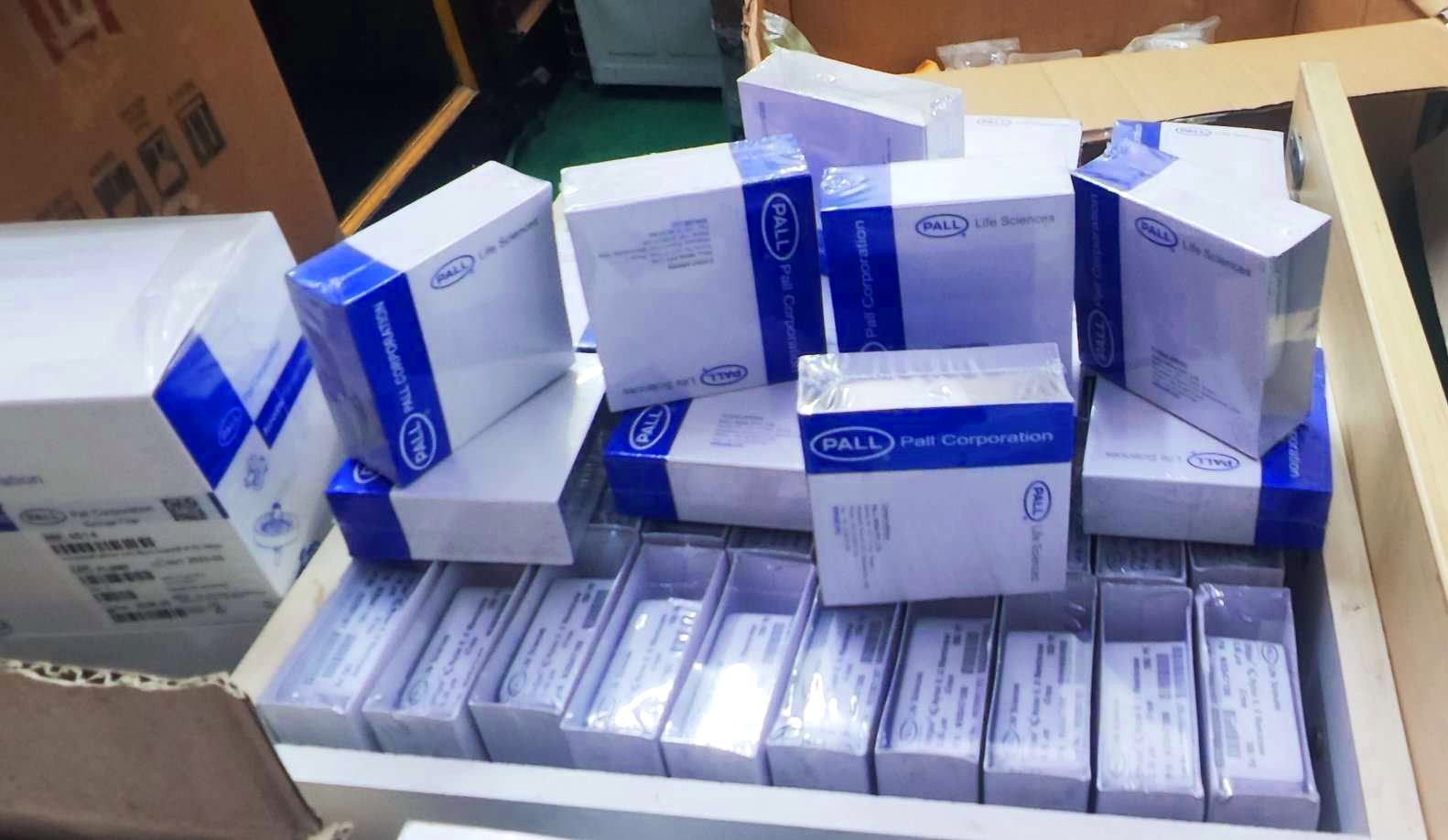
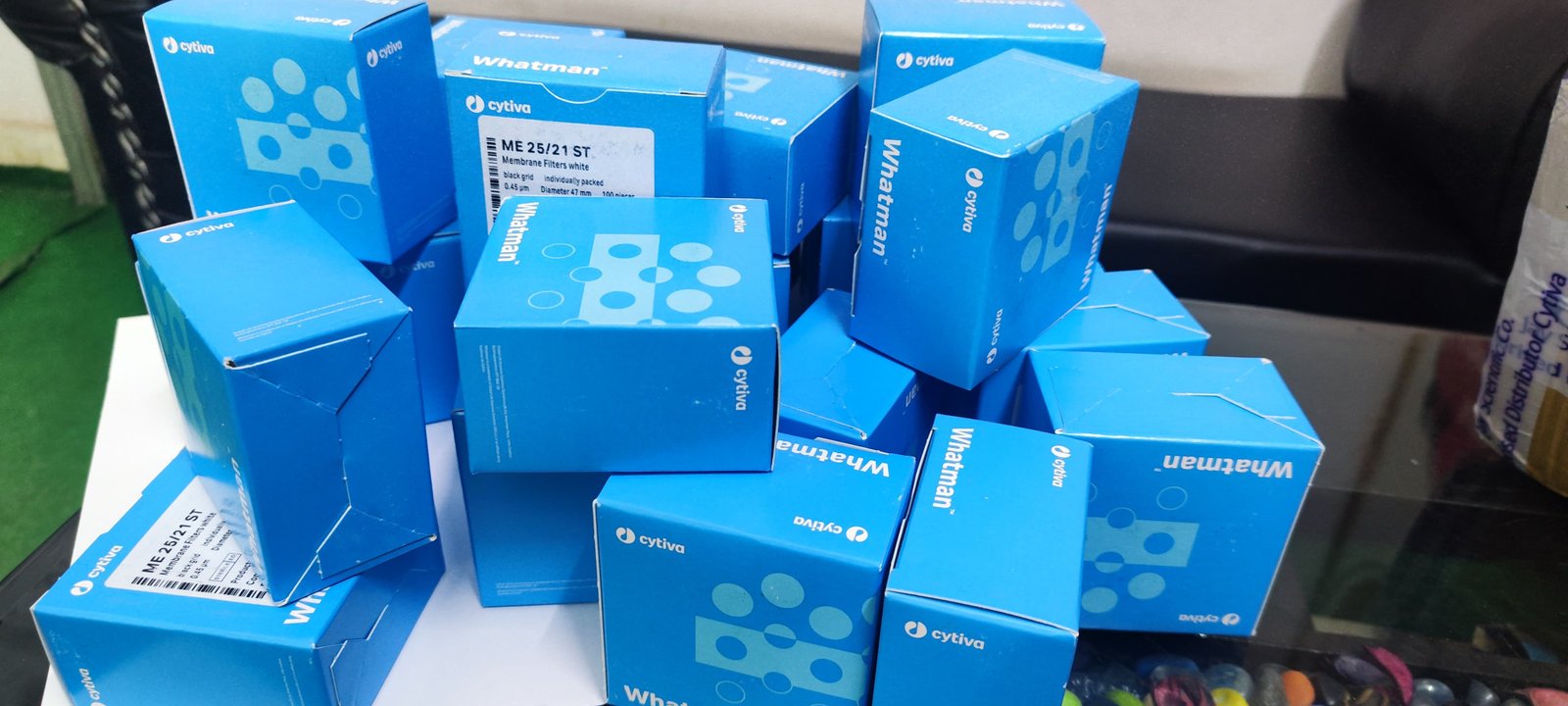
For pharma QC labs processing 40–80 dissolution samples daily, the 25 mm diameter significantly reduces per-sample filtration time versus 13 mm — we regularly see labs switch to 25 mm Pall Acrodisc or Whatman GD/X for exactly this throughput reason.
🔬 Need help matching the right syringe filter to your HPLC method?
Share your method
details and sample matrix — our filtration specialist will recommend the exact membrane, pore size, and
diameter.
Which Membrane Works Best for Your Industry?
Pharmaceutical QC labs (Baddi, Nalagarh, Selaqui, Delhi NCR)
Dissolution testing, content uniformity, assay, and impurity profiling. PES and Nylon dominate. PES is the upgrade path for labs concerned about analyte adsorption in protein-based drug formulations. PVDF for biologics QC where recovery rates directly impact batch release calculations.
Biotech and life science R&D (Genome Valley Hyderabad, Bengaluru)
Protein samples, cell culture supernatants, antibody preparations. PVDF and PES are the only sensible choices — nylon's protein binding is disqualifying for these workflows. Sterile 0.2 µm PES filters (like the Pall Acrodisc 4612) are the reference standard.
Environmental and water testing labs (Pantnagar, Haridwar, Kanpur)
Aqueous samples with high particulate loads. Nylon handles most water chemistry samples well. For COD and heavy metal digests involving concentrated acids, switch to PTFE.
Petrochemical and chemical QC (Panipat, Paradip, Haldia)
Non-aqueous solvents, aromatic hydrocarbons, chlorinated compounds. PTFE is the only safe choice — any other membrane risks dissolution into the sample.
Food and beverage QC (FSSAI-regulated labs)
Mostly aqueous and mild organic extracts. Nylon handles 80% of food testing HPLC prep. PVDF for fat extraction filtrates in edible oil and dairy labs.
🧪 Sourcing syringe filters for a pharma QC lab in the Baddi–Nalagarh belt?
Scientific
Edge dispatches Whatman, Pall, and Axiva syringe filters to the HP pharma corridor with next-day delivery.
Call for stock availability and bulk pricing with COA documentation.
3 Filtration Mistakes That Ruin HPLC Results (And How to Avoid Them)
Mistake 1: Using nylon with strong acid digests. Nylon degrades below pH 3. If you're filtering acid-digested samples (common in heavy metal analysis), switch to PTFE. We've had an environmental lab in Kanpur trace persistent baseline artifacts back to nylon membrane fragments leaching into their ICP-OES samples.
Mistake 2: Using PTFE for aqueous samples without pre-wetting. PTFE is hydrophobic — push an aqueous sample through without a methanol pre-wet, and you'll get incomplete filtration and air bubbles in the filtrate. The fix takes 10 seconds (wet with 1 mL methanol, discard, then filter your sample), but most SOPs don't mention it.
Mistake 3: Reusing syringe filters between samples. Cross-contamination between samples isn't a theoretical risk — it's a measured one. A single-use filter costs ₹15–80 depending on membrane and brand. A failed batch investigation costs your lab days. The math is straightforward.
How to Verify You're Getting Genuine Filters (The COA Question)
This documentation isn't optional for pharma QC labs audited under CDSCO or NABL standards. Scientific Edge is an authorized channel partner for Pall, Whatman, and Axiva, supplying syringe filters across all four membrane types with batch-specific COA and MSDS included at no extra cost. ISO 9001:2015 certified. Same-day dispatch for in-stock items in Delhi NCR (orders before 2 PM), with 1–2 day reach to Baddi, Haridwar, and Rudrapur.
Syringe Filter Quick-Selection Flowchart
🔬 Select Your Filter in 30 Seconds
- Is your sample aqueous or organic?
Aqueous → Go to step 2 · Organic (chloroform, hexane, DCM, toluene) → Use PTFE · Mixed → Go to step 2 - Does your sample contain proteins or biological molecules?
Yes → Use PVDF or PES (lowest protein binding) · No → Go to step 3 - Is your sample strongly acidic (pH < 3)?
Yes → Use PTFE (pre-wet with methanol) · No → Use Nylon (general-purpose default) - Pore size: 0.45 µm for routine HPLC | 0.22 µm for sterile filtration or UHPLC
- Diameter: 13 mm for 1–10 mL | 25 mm for > 10 mL
How to Request an Immediate Quote on WhatsApp
- Copy the table below (or list your product needs).
- Send to Scientific Edge WhatsApp Business →
- Receive an official quotation with GST breakdown within 2 hours.
| Product Needed | Membrane | Pore Size | Brand Preference | Qty Required | Delivery Location |
|---|---|---|---|---|---|
| e.g., Syringe Filter | PVDF | 0.22 µm | Whatman / Pall | 500 pcs | Baddi Industrial Area |
Frequently Asked Questions — Syringe Filter Selection
Nylon is the general-purpose default for routine HPLC analysis of aqueous and mild organic samples. For protein-containing samples, use PVDF or PES to minimize analyte adsorption. For aggressive organic solvents, use PTFE. The "best" membrane depends on your specific sample chemistry — there is no universal answer.
A 0.45 µm filter removes particulates sufficient for routine HPLC column protection. A 0.22 µm filter provides finer clarification and is required for sterile filtration and UHPLC systems with sub-2 µm column packings. For most analytical HPLC methods, 0.45 µm is the standard unless your SOP specifies otherwise.
Nylon is compatible with many organic solvents including methanol, ethanol, and acetonitrile. However, it is not suitable for strong acids (pH < 3), concentrated bases, or aggressive solvents like chloroform and DMSO. For those, use PTFE.
Use PVDF or PES (polyethersulfone) membranes for protein-containing samples. Both have very low protein binding — PES has the lowest of all common membrane materials. Avoid nylon for protein samples, as it can adsorb 10–30% of protein analytes during filtration.
For dissolution testing per USP methods, use 0.45 µm nylon or PVDF in 25 mm diameter for high-throughput processing. Ensure the filter supplier provides a batch-specific Certificate of Analysis (COA) — this is an audit requirement under CDSCO and NABL guidelines.
Sabse pehle apne sample ki chemistry check karein — aqueous hai toh Nylon ya PES; organic solvents hain toh PTFE use karein. Pore size 0.45 µm HPLC ke liye standard hai. Protein samples ke liye PVDF ya PES choose karein kyunki inme protein binding sabse kam hoti hai.
Scientific Edge is an authorized channel partner for Pall, Whatman, and Axiva, based in Mayur Vihar Phase-3, Delhi. Every syringe filter order includes a batch-specific COA and MSDS. Same-day dispatch for in-stock items across Delhi NCR — call +91 99901 40888 for immediate stock availability.
✅ Key Takeaways
- Match membrane to chemistry — not to price or habit. Nylon for general HPLC, PVDF/PES for proteins, PTFE for organic solvents.
- Don't over-specify pore size — 0.45 µm is the HPLC standard; 0.22 µm is for sterile filtration and UHPLC only.
- Demand a COA — any syringe filter without batch-specific documentation is a compliance risk for regulated labs.
📞 Call Scientific Edge for a syringe filter recommendation matched to your exact HPLC method — quotation with brand options and COA confirmation within 2 hours.