STP Plant Hospital Dosing Chemicals: What Hospitals Should Buy, Why It Matters, and How to Choose the Right Supplier in India
STP plant hospital dosing chemicals directly affect pathogen reduction, odour control, sludge settling, pH balance, and discharge quality. When sourcing is inconsistent, hospitals face fluctuating treatment performance, urgent stockouts, dosing errors, and unnecessary compliance pressure.
That is why hospitals, medical colleges, nursing homes, and healthcare campuses increasingly look for an STP plant hospital dosing chemicals supplier in India that can provide the full chemical range, documentation support, and dependable repeat supply. For related procurement needs, teams often also compare STP and ETP solutions, laboratory chemicals and reagents, and broader industry application solutions.
Why Hospitals Need Specialized STP Plant Hospital Dosing Chemicals
Hospital wastewater is different from standard domestic sewage. It may contain higher microbial load, cleaning chemicals, pharmaceutical traces, organic matter, suspended solids, and variable pH. A sewage treatment plant serving this environment needs carefully selected chemicals at different treatment stages.
Typical treatment goals include:
- Improved coagulation and flocculation
- Stable pH for biological treatment
- Stronger disinfection performance
- Reduced sludge handling problems
- Safer final discharge quality
- Lower risk of process upset during peak load conditions
For this reason, STP chemical suppliers serving hospitals should understand treatment stages, plant operating conditions, and documentation needs. Hospitals that also monitor treated water quality typically need access to reliable water analyzers for regular testing and control.
Core STP Plant Hospital Dosing Chemicals Used in Treatment Systems
The exact dosing program depends on plant design, inlet load, and discharge targets, but most hospital STPs rely on the following chemical categories.
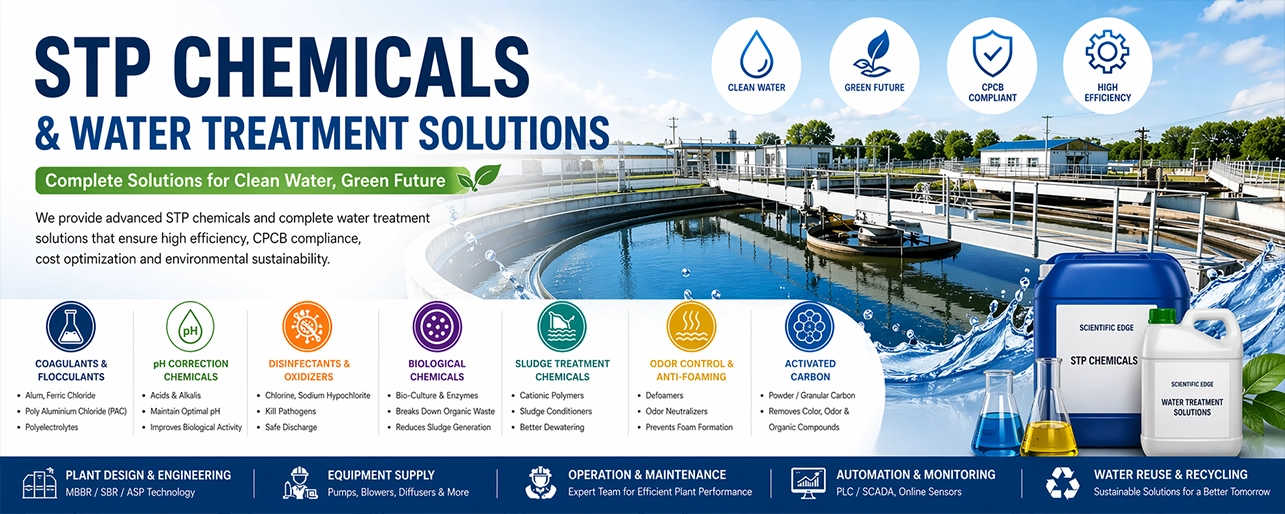
1. Coagulants and Flocculants
These chemicals help destabilize suspended particles and improve settling efficiency.
- Aluminum sulfate (alum)
- Ferric chloride
- Ferric sulfate
- Polyaluminum chloride (PAC)
Among these, Polyaluminum chloride (PAC) is widely used for faster settling and better clarification. Ferric chloride and ferric sulfate are commonly selected where stronger coagulation or phosphate reduction is required. Where influent testing and sample preparation are part of the workflow, teams may also need dependable filtration solutions.
2. pH Correction Chemicals
Biological treatment efficiency depends heavily on pH control. Hospitals often need both acidic and alkaline chemicals depending on influent variation and process stage.
- Sulfuric acid
- Hydrochloric acid
- Sodium hydroxide
- Calcium carbonate (lime)
3. Disinfection Chemicals
Disinfection is a critical part of hospital sewage treatment because treated water may still carry pathogens if chlorination or oxidation is poorly controlled.
- Chlorine gas
- Sodium hypochlorite (bleach)
- Calcium hypochlorite
- Ozone
For many hospital facilities, sodium hypochlorite is preferred because it is easier to handle operationally than gas chlorination, while ozone is used where stronger oxidation and organic pollutant reduction are needed.
4. Dechlorination Chemicals
When excess chlorine needs to be neutralized before discharge or reuse, hospitals commonly use:
- Sodium bisulfite
- Sulfur dioxide
How the Right STP Chemical Suppliers Reduce Hospital Risk
Choosing among STP chemical suppliers is not only about price per drum. Hospitals need a supplier who can reduce procurement risk and support uninterrupted plant operation.
The right supplier should help with:
- Consistent batch quality
- Regular availability for repeat dosing
- COA and MSDS support where required
- Product matching to plant capacity and treatment stage
- Quicker quotation and replenishment cycles
- Multi-chemical sourcing from one vendor
What Hospitals Should Verify Before Buying STP Plant Hospital Dosing Chemicals
- Confirm the exact treatment stage where the chemical will be used.
- Verify concentration, grade, and compatibility with dosing equipment.
- Ask for COA, MSDS, and handling information where applicable.
- Check whether the supplier can support repeat monthly or quarterly supply.
- Ensure the supplier can provide multiple chemicals from one source.
- Review delivery timelines for urgent replenishment.
- Align the purchase with plant operator feedback and current treatment problems.
Scientific Edge as an STP Plant Hospital Dosing Chemicals Supplier in India
Scientific Edge supports hospitals, medical institutions, utilities teams, and plant operators looking for a dependable STP plant hospital dosing chemicals supplier in India with a technical and procurement-first approach. This fits well for buyers who want one sourcing partner across STP/ETP solutions, chemicals, filtration products, and water testing instruments.
Scientific Edge can support requirements such as:
- Coagulants such as alum, ferric chloride, ferric sulfate, and PAC
- pH control chemicals such as hydrochloric acid, sulfuric acid, sodium hydroxide, and lime
- Disinfectants such as sodium hypochlorite and related chlorination chemicals
- Dechlorination chemicals such as sodium bisulfite
- Documentation-led supply for institutional and regulated buyers
- Faster quote response and repeat procurement support
Where Hospitals Usually See Chemical Quality Problems
- Clarifier performance drops because alum or PAC quality varies
- pH swings reduce biological treatment stability
- Disinfection becomes inconsistent due to weak sodium hypochlorite supply
- Sludge dewatering becomes inefficient because coagulation is poor
- Procurement teams face delays because different vendors supply different treatment chemicals
In many cases, what appears to be an operating issue is actually a sourcing issue. A one-vendor model usually works better because it simplifies purchasing, improves stock planning, and creates clearer accountability.
Conclusion
STP plant hospital dosing chemicals play a direct role in treatment efficiency, discharge quality, and day-to-day plant stability. Hospitals need the right combination of coagulants, pH correction chemicals, disinfectants, and dechlorination chemicals backed by documentation and reliable supply.
If your team is evaluating hospital wastewater treatment chemicals, Scientific Edge can support you with a multi-category supply approach designed for technical buyers, facility teams, and institutional procurement departments across India. For laboratories and utilities teams handling broader water quality workflows, Scientific Edge also supports lab water purification systems and water analyzers.
Call to Action
Need a reliable source for STP plant hospital dosing chemicals?
Talk to Scientific Edge for quote-focused support on PAC, alum, ferric chloride, ferric sulfate, sodium hypochlorite, hydrochloric acid, sodium hydroxide, lime, and related hospital STP chemicals.
Contact Scientific Edge to request a quotation and discuss your plant requirement with our team.
Suggested Internal Links
- STP & ETP Solutions
- Laboratory Chemicals Supplier in India
- Lab Filtration Solutions
- Water Analyzers
- Lab Water Purification Systems
- Industry Applications
Frequently Asked Questions
Which chemicals are commonly used in hospital STPs?
Common hospital STP chemicals include alum, PAC, ferric chloride, ferric sulfate, sulfuric acid, hydrochloric acid, sodium hydroxide, lime, sodium hypochlorite, calcium hypochlorite, ozone, and sodium bisulfite.
Why is PAC widely used in hospital sewage treatment plants?
PAC is widely used because it supports faster settling, improved clarification, and more stable coagulation performance in many treatment conditions.
What should hospitals ask from an STP chemical supplier?
Hospitals should ask for product suitability, consistent supply, COA, MSDS, delivery timelines, and support for repeat procurement across multiple treatment chemicals.
Why do hospitals prefer one STP chemical supplier?
A one-vendor model simplifies purchasing, improves stock planning, reduces documentation gaps, and creates better accountability for recurring plant operations.