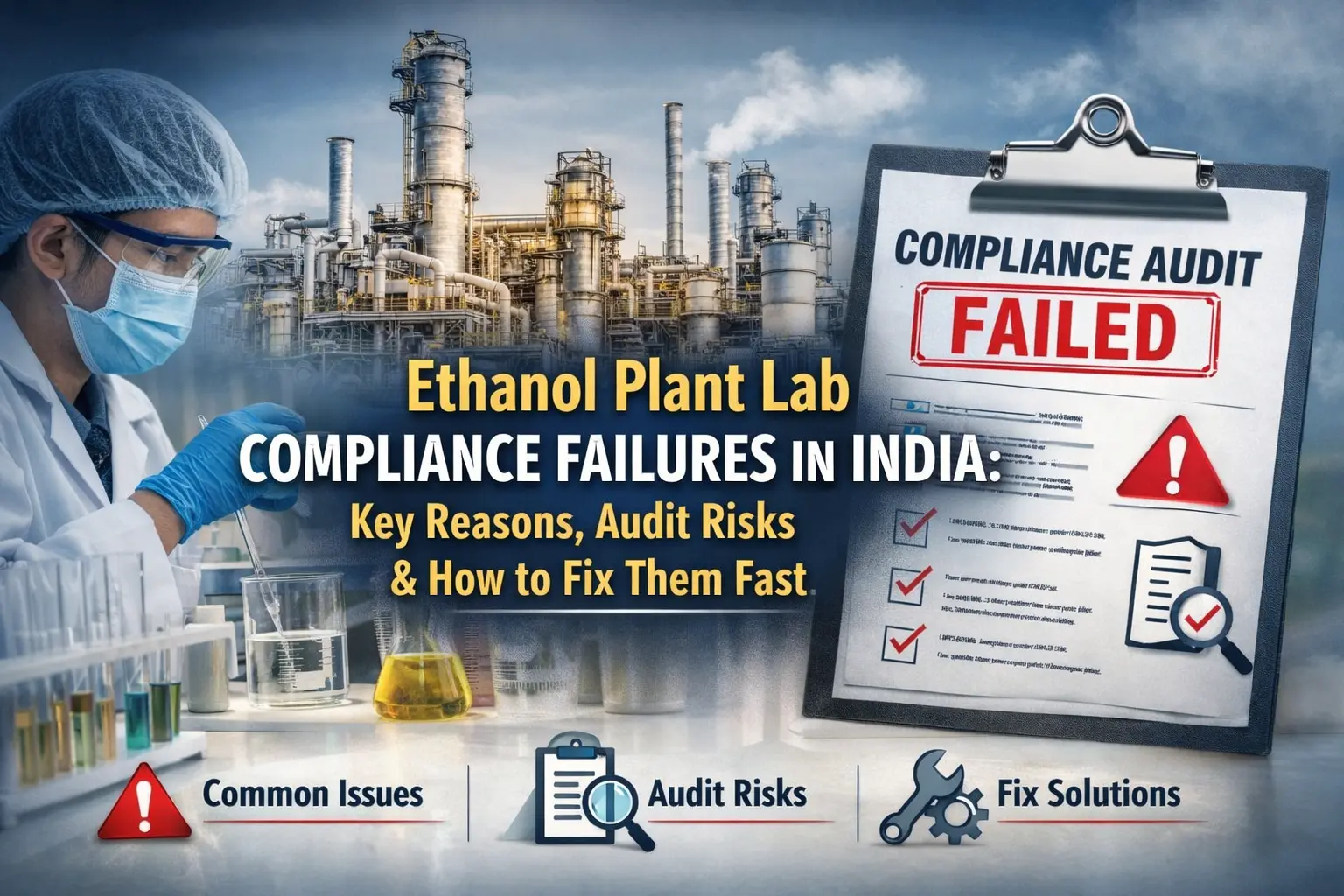
Ethanol Plant Lab Compliance Failures in India: Key Reasons, Audit Risks & How to Fix Them Fast
Your ethanol plant is running at capacity. Fermentation yields look acceptable. Distillation output meets the contracted specification.
Then the audit team walks in.
Inconsistent water quality records. Missing Certificates of Analysis. Untraceable reagent lots. Undocumented calibration schedules. Filtration logs that do not exist.
The audit fails. Production gets flagged. Your licence renewal is suddenly at risk.
This is not a hypothetical scenario. It plays out across ethanol distilleries, petroleum refineries, and petrochemical QC labs in India every quarter. And the root cause is almost never a lack of intent — it is a lack of supplier infrastructure. The gap between what the laboratory needs and what a generic equipment vendor actually delivers.
If you are an ethanol plant owner, refinery procurement head, QC manager, or compliance officer, this guide breaks down why compliance failures happen, what the real audit risks are, and how to fix them before they cost you the licence.
What Ethanol, Refinery & Petrochemical Labs Actually Need to Pass Audits
An audit-ready laboratory for ethanol production, petroleum refining, or petrochemical process control requires four interconnected capabilities:
- Accurate, repeatable analytical testing — for feedstock, in-process, and finished product quality
- Documented, traceable supply chains — for every chemical, reagent, filter, and consumable entering the lab
- Compliant water systems — meeting ASTM D1193 and IS 1070 requirements for reagent preparation, instrument feed, and cleaning
- Technical support infrastructure — keeping the lab operational without unplanned downtime
Without all four, compliance breaks down. Not immediately — but inevitably, at the worst possible time.
Why Compliance Pressure Is Intensifying Right Now
India's ethanol blending programme — targeting 20% blending by 2025–26 under the National Biofuel Policy — has accelerated capacity expansion across Bihar, Uttar Pradesh, Maharashtra, and Karnataka. New ethanol plants are coming online rapidly, but laboratory infrastructure has not kept pace.
At the same time, petroleum refineries and petrochemical complexes face intensifying scrutiny under:
- BIS (Bureau of Indian Standards) — fuel quality and product grading
- CPCB/SPCB norms — effluent and emission testing
- ASTM and ISO standards — water quality, reagent purity, and method validation
- Internal quality management systems — aligned with ISO 9001 or ISO/IEC 17025
The result: laboratories in these sectors are no longer back-office functions. They are compliance-critical infrastructure, and the equipment, chemicals, and systems inside them must be audit-defensible.
6 Key Reasons Ethanol & Refinery Labs Fail Compliance Audits
1. Inconsistent Analytical Results
The problem: Labs source chemicals from multiple unverified vendors. Batch-to-batch purity variation stays invisible until results fail reproducibility checks. For ethanol distillation monitoring — where even 0.1% impurity in denaturant or moisture content triggers a specification breach — this inconsistency is costly.
The audit risk: Regulators flag inconsistent test data as evidence of uncontrolled lab processes. Repeated failures can lead to licence suspension and product recall.
How to fix it: Source all chemicals and reagents from a single, certified supplier who provides traceable COA with every batch. Standardize on AR, LR, or HPLC-grade chemicals from verified brands. Eliminate multi-vendor sourcing for critical reagents entirely.
2. Poor Water Purification Quality
The problem: Many ethanol and refinery labs still rely on basic RO units that cannot deliver the water grade needed for HPLC, GC, Karl Fischer titration, or spectrophotometry. ASTM water quality testing in refineries demands Type I or Type II water, yet most entry-level purifiers deliver inconsistent conductivity, elevated TOC, and no real-time monitoring.
The audit risk: Auditors check water quality logs. If your lab cannot demonstrate that reagent water meets ASTM D1193 specifications — with documented monitoring records — every test result produced using that water is questioned.
How to fix it: Replace basic RO units with a properly configured lab water purification system that delivers Type I, Type II, or Type III water matched to your analytical methods. Ensure real-time conductivity and TOC monitoring is installed, and maintain documented water quality logs.
3. Documentation Gaps That Surface During Audits
The problem: Generic suppliers deliver products without Certificates of Analysis (COA), Material Safety Data Sheets (MSDS), or traceable lot documentation. When an auditor asks for incoming inspection records, reagent traceability, or equipment qualification documents, the lab has nothing to show.
The audit risk: Missing documentation is treated as a critical non-conformance. It does not matter if the equipment works perfectly — without the paper trail, the auditor cannot verify compliance.
How to fix it: Mandate that every supplier delivers COA, MSDS, specification compliance sheets, and IQ/OQ/PQ qualification documents as part of standard delivery — not on special request. Build this into your procurement SOP and vendor qualification process.
4. Supplier Delays and Inventory Disruption
The problem: Ethanol plants and refineries cannot pause production because a reagent is out of stock. Yet many labs depend on suppliers with unpredictable lead times, no buffer stock strategy, and no consolidated sourcing for chemicals, consumables, and filtration media.
The audit risk: Stockouts force labs to use substitute chemicals or skip tests. Auditors catch these gaps through missing test records, and they interpret them as evidence of inadequate quality control.
How to fix it: Partner with a supplier who offers consolidated sourcing across chemicals, equipment, filtration, and water systems from one source. Establish a planned restocking cycle and maintain buffer inventory for critical consumables.
5. Non-Compliance with ASTM and IS Standards
The problem: Compliance requirements for ethanol plant labs in India span multiple standards — IS 321 for Rectified Spirit, IS 323 for Denatured Spirit, ASTM D4806 for fuel ethanol, and ASTM D1193 for reagent water. Labs that source equipment and chemicals without verifying standard alignment risk producing results that regulators will not accept.
The audit risk: Test results generated outside the applicable standard are invalid. This can invalidate an entire production batch and trigger a formal audit finding that escalates to regulatory action.
How to fix it: Before procurement, map every piece of equipment, chemical, and consumable to the specific ASTM, IS, or ISO standard your lab must comply with. Choose a supplier who understands these standards and can verify alignment before shipping.
6. No Technical Consultation During Procurement
The problem: Most suppliers sell boxes. They do not help labs design workflows, select the right filtration grade, or map water quality to the specific analytical method. This leaves the lab manager to guess — and guessing in a regulated environment creates risk.
The audit risk: Mismatched equipment leads to incorrect test methods, which auditors identify as systemic process failures — not isolated errors.
How to fix it: Work with a supplier who provides technical consultation as part of the procurement process. The supplier should be able to advise on method-specific equipment selection, water grade mapping, filtration compatibility, and compliance planning before the purchase order is issued.
How to Choose Lab Equipment for Ethanol Production: A Decision Framework
Before issuing a purchase order, technical and procurement teams should evaluate suppliers against five criteria:
| Evaluation Criteria | What to Verify |
|---|---|
| Product range coverage | Can the supplier provide equipment, chemicals, reagents, filters, AND water systems from a single source? |
| Documentation readiness | Does the supplier provide COA, MSDS, IQ/OQ/PQ support, and traceable lot records as standard? |
| Standards alignment | Are products verified against ASTM, IS, and ISO standards relevant to ethanol, refinery, and petrochemical applications? |
| Technical support capability | Can the supplier advise on method-specific equipment selection, water grade mapping, and compliance planning? |
| After-sales and service | Is preventive maintenance, consumable restocking, and breakdown response structured — or reactive? |
If the answer to any of these is "no," the supplier is a risk factor, not a solution.
ScientificEdge: Role & Solutions for Ethanol, Refinery & Petrochemical Labs
ScientificEdge is not a generic catalog reseller. It is a technical sourcing and compliance partner for regulated industrial laboratories — purpose-built to solve the exact audit risks described above.
Here is what ScientificEdge brings to your lab:
Single-Source, Certified Supply — Eliminating Multi-Vendor Risk
ScientificEdge supplies laboratory chemicals and reagents from trusted, certified brands including Loba Chemie, Qualigens (Thermo Fisher), CDH, SRL, Rankem, HiMedia, and AquaSol. Every shipment includes traceable COA and MSDS documentation as standard — no follow-ups, no special requests.
Your fix for Challenge #1 and #4: One supplier. One quality standard. One documentation trail. No gaps.
Industrial Filtration Systems for Ethanol Plants
From membrane filters and syringe filters to vacuum filtration assemblies, ScientificEdge supplies filtration solutions from Whatman, Cytiva, Pall India, Millipore, and Axiva — purpose-matched to ethanol distillation lab workflows, refinery QC sample preparation, and petrochemical wastewater analysis.
Your fix for Challenge #1: Correct filtration eliminates sample contamination before it reaches your instrument — and your audit report.
Ultrapure Water Systems for Refineries & Ethanol Labs
ScientificEdge provides lab water purification systems — Type I, Type II, and Type III — from Ion Exchange, AquaSol, and Evoqua. These systems are configured to meet ASTM D1193 requirements for instrument feed, reagent preparation, and cleaning.
Your fix for Challenge #2: Replace the basic RO that fails every audit with a properly configured, monitored, documented water system.
Audit-Ready Documentation — Standard, Not Optional
Unlike most suppliers, ScientificEdge structures procurement around documentation completeness. COA, MSDS, specification compliance sheets, and IQ/OQ/PQ qualification support are part of every delivery.
Your fix for Challenge #3: When the auditor asks for documentation, you hand over a complete file — not a promise to "send it later."
Technical Consultation — Before You Buy, Not After You Fail
ScientificEdge helps labs choose the right equipment for ethanol production, refinery QC, and petrochemical R&D. Not by selling the most expensive option, but by mapping the requirement to the method, the standard, and the budget.
Your fix for Challenge #5 and #6: Every purchase is standards-aligned and method-verified before it ships.
Structured After-Sales Support & Preventive Maintenance
Structured preventive maintenance, consumable planning, and responsive breakdown support ensure uptime in laboratories where unplanned downtime is unacceptable.
Your fix for Challenge #4: Planned restocking, not panic orders.
Products & Solutions at a Glance
| Product Category | Application | Brands Available |
|---|---|---|
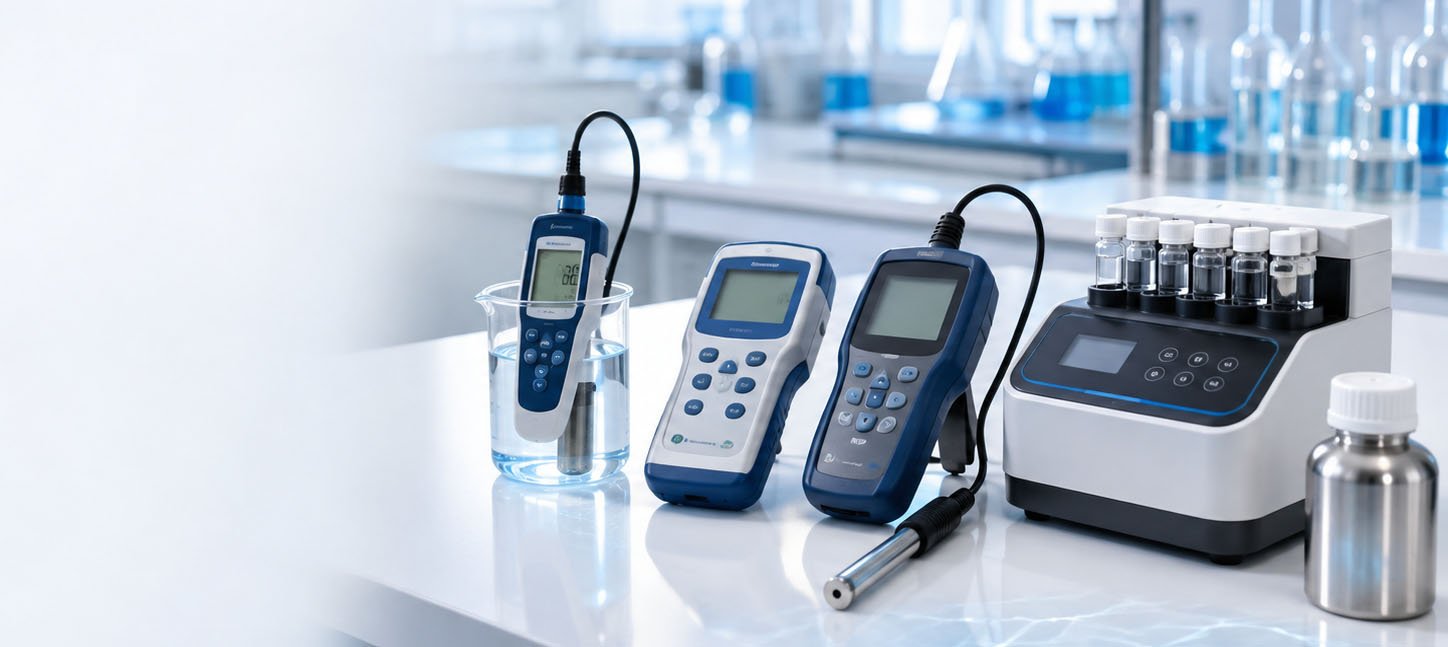
| Laboratory Equipment | Analytical instruments, testing devices, weighing, heating, mixing | Borosil, Thermo Fisher, Hanna Instruments |
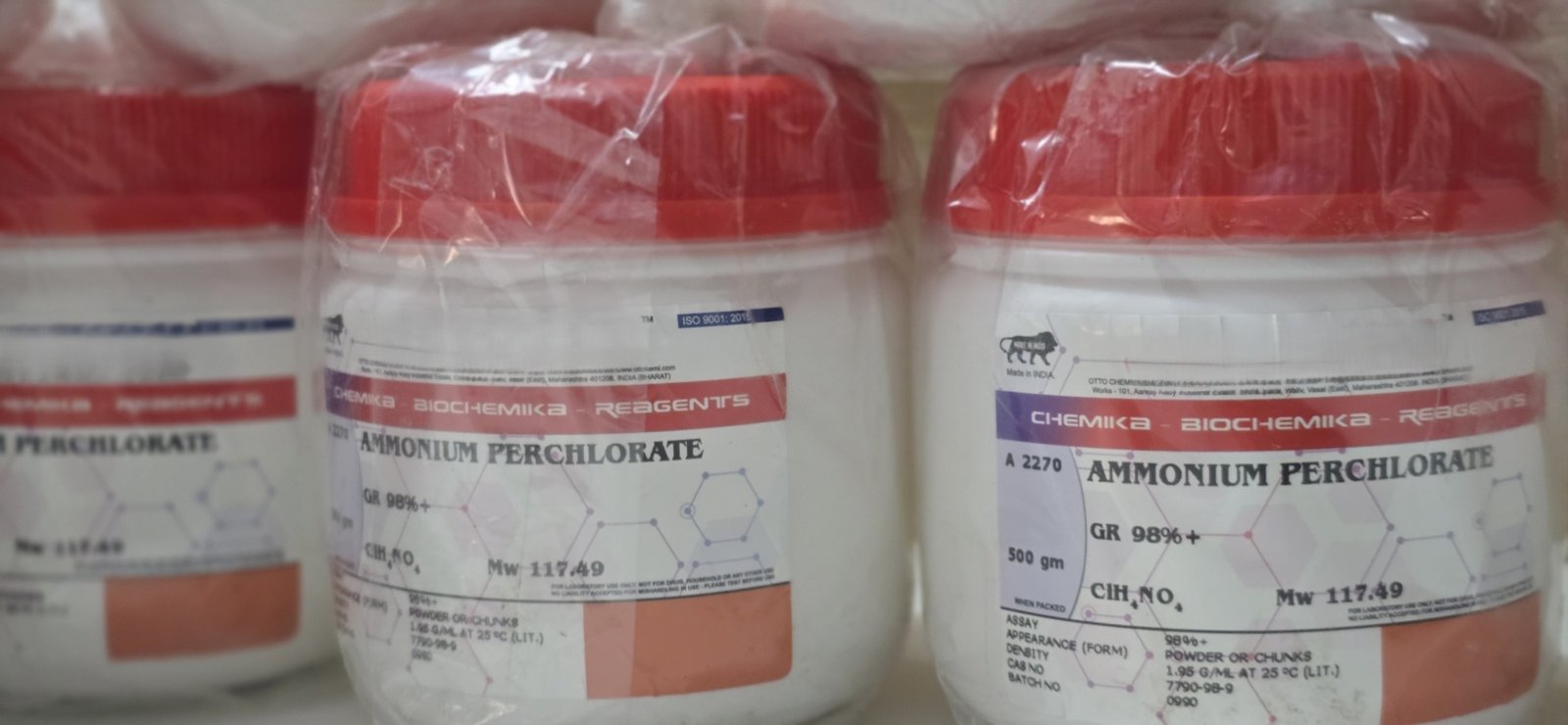
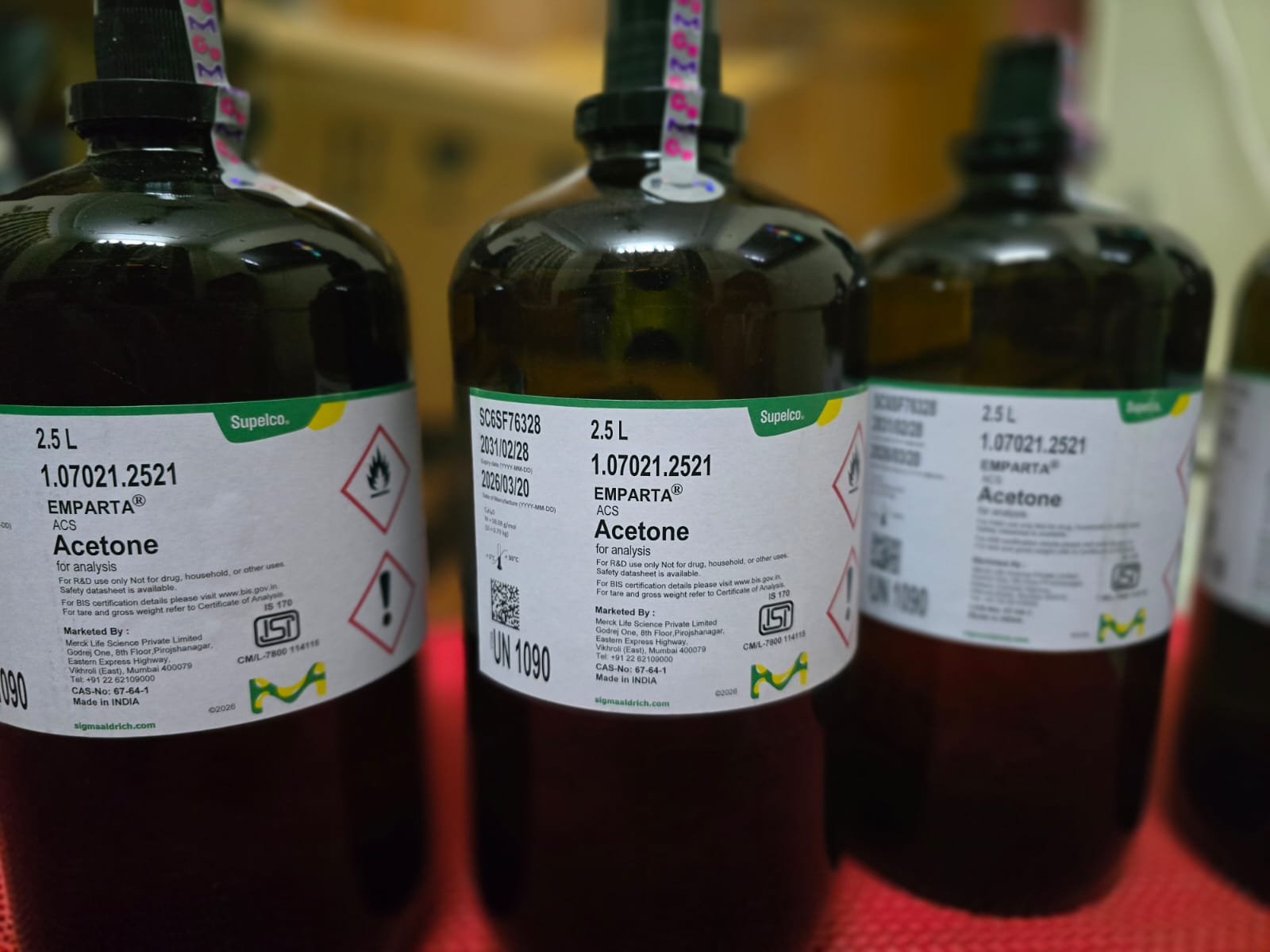
| Chemicals & Reagents | AR, LR, HPLC grade solvents, standards, buffers | Loba Chemie, Qualigens, CDH, SRL, Rankem |
| Filtration Systems | Sample prep, wastewater analysis, particulate removal | Whatman, Cytiva, Pall, Millipore, Axiva |
| Water Purification | Type I/II/III for HPLC, GC, Karl Fischer, spectrophotometry | Ion Exchange, AquaSol, Evoqua |
| Glassware & Consumables | Borosilicate glassware, plastic labware, pipettes, tips | Borosil, Abdos Life Science, PolyLab |
Use Cases: Where These Solutions Fix Real Problems
Ethanol Distillation Laboratories
Feedstock analysis (molasses, grain), fermentation monitoring (pH, acidity, sugar content), distillation column QC (alcohol strength, moisture, denaturant), and final product certification — all require reliable chemicals, calibrated instruments, and documented reagent sourcing. ScientificEdge supplies the complete lab stack with audit-ready documentation at every step.
Refinery QC Laboratories
Petroleum product testing — octane number, flash point, viscosity, sulphur content, water content by Karl Fischer — depends on certified reference standards, ASTM-aligned reagents, and ultrapure water for instrument-sensitive methods. ScientificEdge ensures every input to the analytical chain is traceable and standards-compliant.
Petrochemical R&D and Process Control Labs
Polymer characterization, catalyst evaluation, wastewater analysis, and environmental compliance testing require high-purity solvents, precision filtration, and chemically resistant consumables. ScientificEdge provides petrochemical water testing systems and the full range of supporting lab infrastructure — with documentation that auditors accept.
Bihar & India Context: Why This Matters Now
Bihar is emerging as a significant hub for ethanol production, driven by the state's sugarcane and maize cultivation belt and the central government's push for biofuel self-sufficiency. New distilleries in Muzaffarpur, Purnea, Saharsa, Hajipur, and Darbhanga are creating demand for compliant laboratory infrastructure that most local suppliers cannot fulfil.
ScientificEdge, with an established presence and supply chain covering Bihar and Pan India, serves these facilities with:
- Faster delivery to Bihar ethanol plant locations
- Technical familiarity with regional feedstock profiles
- Compliance-aligned sourcing for government-backed biofuel projects
- Scalable supply for multi-plant operators expanding across states
For ethanol plant owners and procurement heads searching for Bihar ethanol plant suppliers who can deliver audit-ready lab solutions, ScientificEdge is the technical partner the industry needs.
Standards & Compliance That ScientificEdge Supports
| Standard / Reference | Application |
|---|---|
| ASTM D4806 | Fuel ethanol purity, denaturant, water content |
| ASTM D1193 | Reagent water grades for laboratory use |
| IS 321 / IS 323 | Rectified spirit and denatured spirit specifications |
| ISO 9001 | Quality management system alignment |
| ISO/IEC 17025 | Laboratory competence and traceability requirements |
| CPCB / SPCB | Environmental testing and effluent compliance |
| IQ/OQ/PQ documentation | Equipment qualification for regulated environments |
ScientificEdge provides COA, MSDS, and specification compliance documentation as part of every supply cycle — making the lab audit-ready from day one, not after weeks of retroactive paperwork.
Frequently Asked Questions
1. How do I choose the right lab equipment for ethanol production?
Start with your analytical requirements: feedstock testing, fermentation monitoring, distillation QC, and final product certification each demand specific instruments, chemicals, and water quality. The right ethanol plant laboratory equipment supplier in India should help you map equipment to your methods and compliance obligations — not just provide a product catalog.
2. What ASTM standards apply to water quality testing in refineries?
ASTM D1193 governs reagent water grades used in laboratory analysis. Refineries performing ASTM water quality testing should ensure their lab water purification system delivers Type I or Type II water depending on the analytical method — and that water quality is monitored and documented continuously.
3. What are the compliance requirements for ethanol plant labs in India?
Ethanol plant labs must comply with IS 321 and IS 323 for spirit specifications, ASTM D4806 for fuel ethanol quality, and relevant CPCB/SPCB norms for environmental testing. Labs that also serve as quality-system labs must align with ISO 9001 or ISO/IEC 17025. Documentation traceability — from chemicals to calibration — is a core audit requirement.
4. What makes an audit-ready lab setup for the petrochemical industry?
An audit-ready lab setup for the petrochemical industry combines certified chemicals with COA, ASTM-aligned water systems with monitoring records, traceable filtration consumables, calibrated instruments with qualification documents (IQ/OQ/PQ), and a supplier who delivers all documentation as standard practice — not on special request.
5. Why is industrial filtration important for ethanol plants?
Ethanol production involves complex sample matrices — molasses-based feedstock, fermentation broth, distillation fractions — that require reliable filtration before analysis. Industrial filtration systems for ethanol plants must remove particulates without introducing contamination, and the filter media must be compatible with ethanol, organic solvents, and aqueous matrices commonly encountered in distillery QC.
6. Can ScientificEdge supply ultrapure water systems for refineries?
Yes. ScientificEdge supplies ultrapure water systems for refineries from Ion Exchange, AquaSol, and Evoqua. These systems are configured for Type I, Type II, and Type III water output suitable for HPLC, GC, Karl Fischer, ICP, and other instrument-sensitive methods used in petroleum refinery and petrochemical laboratories.
7. Does ScientificEdge serve ethanol plants in Bihar?
Yes. ScientificEdge provides industrial lab solutions across Bihar — including Muzaffarpur, Purnea, Saharsa, Hajipur, and Darbhanga — with faster delivery, technical support, and compliance-aligned sourcing for the growing ethanol industry in the state.
8. What documentation does ScientificEdge provide with chemical and equipment supply?
ScientificEdge provides COA (Certificate of Analysis), MSDS (Material Safety Data Sheet), specification compliance sheets, and IQ/OQ/PQ qualification support as standard. This ensures every incoming material and instrument is traceable and audit-defensible from the moment it enters the lab.
Stop Failing Audits. Start Fixing Your Lab Supply Chain.
Your lab audit is not a future problem. It is the next supplier's responsibility — and that supplier should be ScientificEdge.
Call now to speak with our technical team about equipping your ethanol plant, refinery, or petrochemical lab with audit-ready solutions.
Request a customized lab solution mapped to your process, your standards, and your compliance obligations.
Get a quote for laboratory equipment, chemicals, filtration systems, and water purification — delivered with full documentation, technical support, and the reliability your facility demands.
ScientificEdge — Trusted by regulated industries across Bihar and India for compliant, reliable, and technically sound laboratory solutions.
Visit: scientificedge.co.in